%20(8).svg)
UGC Beats Ads
How Brands Use It
.svg)

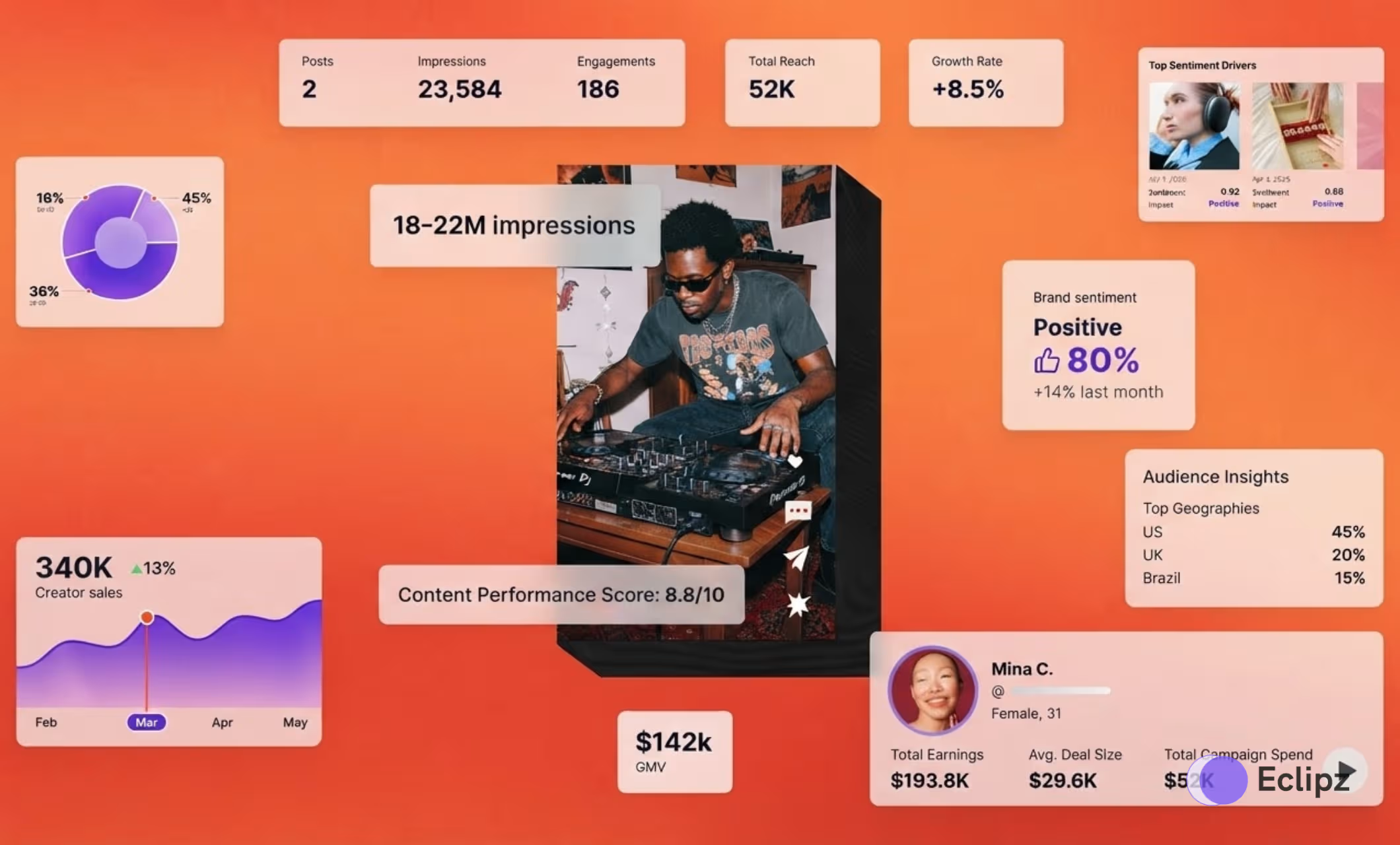
The most expensive ad your brand will ever run is often the one that performs the worst. Polished, studio-produced campaigns with high production budgets and professional talent are consistently being outperformed by a creator filming a product in their living room. This is not a coincidence. It is a fundamental shift in how consumers decide to trust and buy.
THE TRUST GAP THAT TRADITIONAL ADS CANNOT CLOSE
92% of consumers trust peer recommendations over brand messages. 84% trust brands more when they feature UGC in their marketing campaigns. These numbers have remained consistently above 90% across multiple years of research.
The reason is simple. Consumers have spent years being sold to. They have developed an instinct for spotting content that is designed to manipulate rather than inform. A brand saying its product is great carries almost no weight. A real person showing how it fits into their actual life carries enormous weight.
60% of consumers believe UGC is the most authentic form of marketing content. 90% of consumers trust UGC more than traditional advertising. When the gap between brand-produced and creator-produced content is this wide, continuing to invest primarily in traditional ads is a strategy that requires justification.
THE NUMBERS THAT MAKE THE CASE
The performance data on UGC versus traditional ads is not marginal. It is dramatic.
UGC-based ads achieve 4 times higher click-through rates and 50% lower cost per click compared to traditional ads. For a brand running paid social campaigns, this means the same budget either reaches four times the audience or delivers the same reach at half the cost.
UGC video ads show 35% higher watch-through rates compared to polished brand ads. On Instagram specifically, UGC posts earn 28% more engagement than branded posts. 70% of users are more likely to purchase when a product appears in Instagram UGC.
The conversion story is equally strong. UGC on product pages increased conversion rates by up to 200%. Websites featuring UGC saw a 90% increase in time spent on site.
WHY UGC PERFORMS BETTER - THE REAL REASON
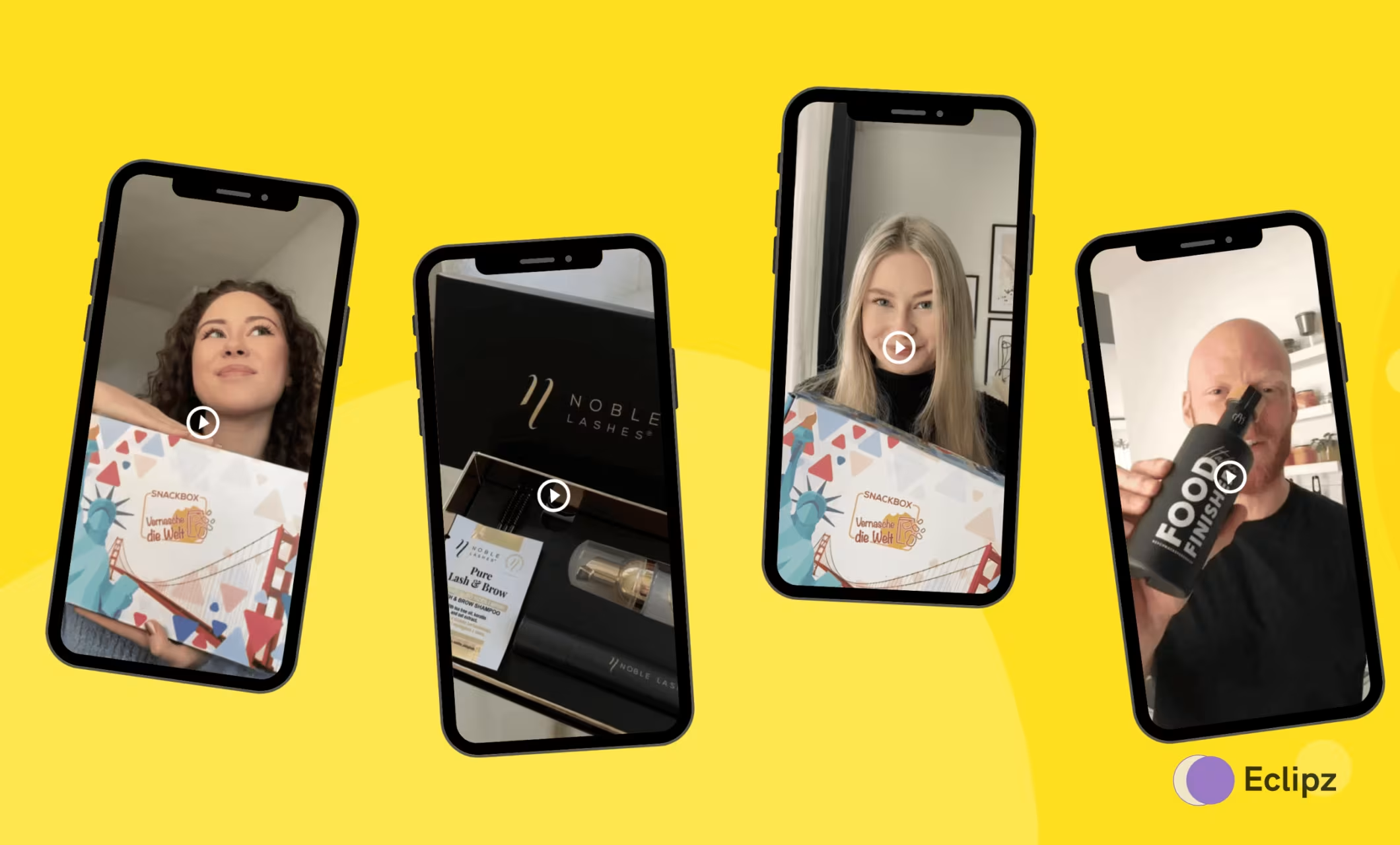
The performance gap exists because of one thing: context. When a creator films a product in their natural environment, using it the way a real customer would, the viewer sees themselves in that content. The product stops being something a brand wants to sell them and starts being something a person like them actually uses.
Traditional ads are built to feel polished and controlled. That control is also what makes them feel distant. Consumers watching a UGC video are not watching an ad. They are watching a person. That is an entirely different psychological experience and it produces entirely different results.
93% of marketing professionals report that UGC outperforms traditional branded content in driving results. When the people running the campaigns say this, it is worth paying attention to.
HOW BRANDS CAN ACTUALLY USE UGC
Understanding why UGC works is the starting point. Knowing how to actually implement it is where most brands fall short.
Brief creators loosely, not tightly. The biggest mistake brands make with UGC is over-briefing. When creators are handed a rigid script and a list of must-mention points, the output feels exactly like what it is - a script. The brief should cover the product, the key message and the platform. The creative execution should belong to the creator entirely.
Use UGC as paid ad creative. Organic UGC is valuable. But the biggest return on investment comes from using high-performing UGC as Spark Ads on Instagram or as paid creative on Meta. Brands save up to 70% on content creation costs using UGC, with brands achieving measurable results including 29% website revenue increases. The same content that performed organically will almost always outperform a brand-produced ad when boosted with budget behind it.
Volume and testing matter. One UGC video is not a strategy. The brands getting the best results from UGC are testing multiple hooks, multiple creators and multiple formats simultaneously. The first video you produce is a test. The data from that test tells you what to scale.
Put UGC on your product pages. Most brands think of UGC as a social media tool. It is also one of the most powerful conversion tools for ecommerce. Adding reviews and UGC to the purchase path increases conversions by 10%. Visitors interacting with UGC convert 102% higher than average. Featuring real creator content alongside product photos on your website is one of the fastest, cheapest conversion rate improvements available.
WHAT MAKES UGC FAIL
Not all UGC performs well. Brands that get poor results from UGC usually make one of three mistakes.
The first is choosing creators based on follower count rather than audience relevance. A creator with 5,000 highly engaged followers in your exact niche will outperform a creator with 500,000 generic followers every time.
The second is approving content to death. Every revision cycle strips authenticity from the content. If a brand is asking for three rounds of changes before approving a UGC video, what comes out the other end is not UGC anymore. It is a brand ad wearing creator clothes.
The third is treating UGC as a one-time campaign rather than an always-on strategy. 67% of retailers plan to increase UGC investment in the coming year precisely because the brands seeing the best results have made it a permanent part of their marketing mix rather than a seasonal experiment.