%20(8).svg)
Virtual Influencers
Real Budgets.
.svg)
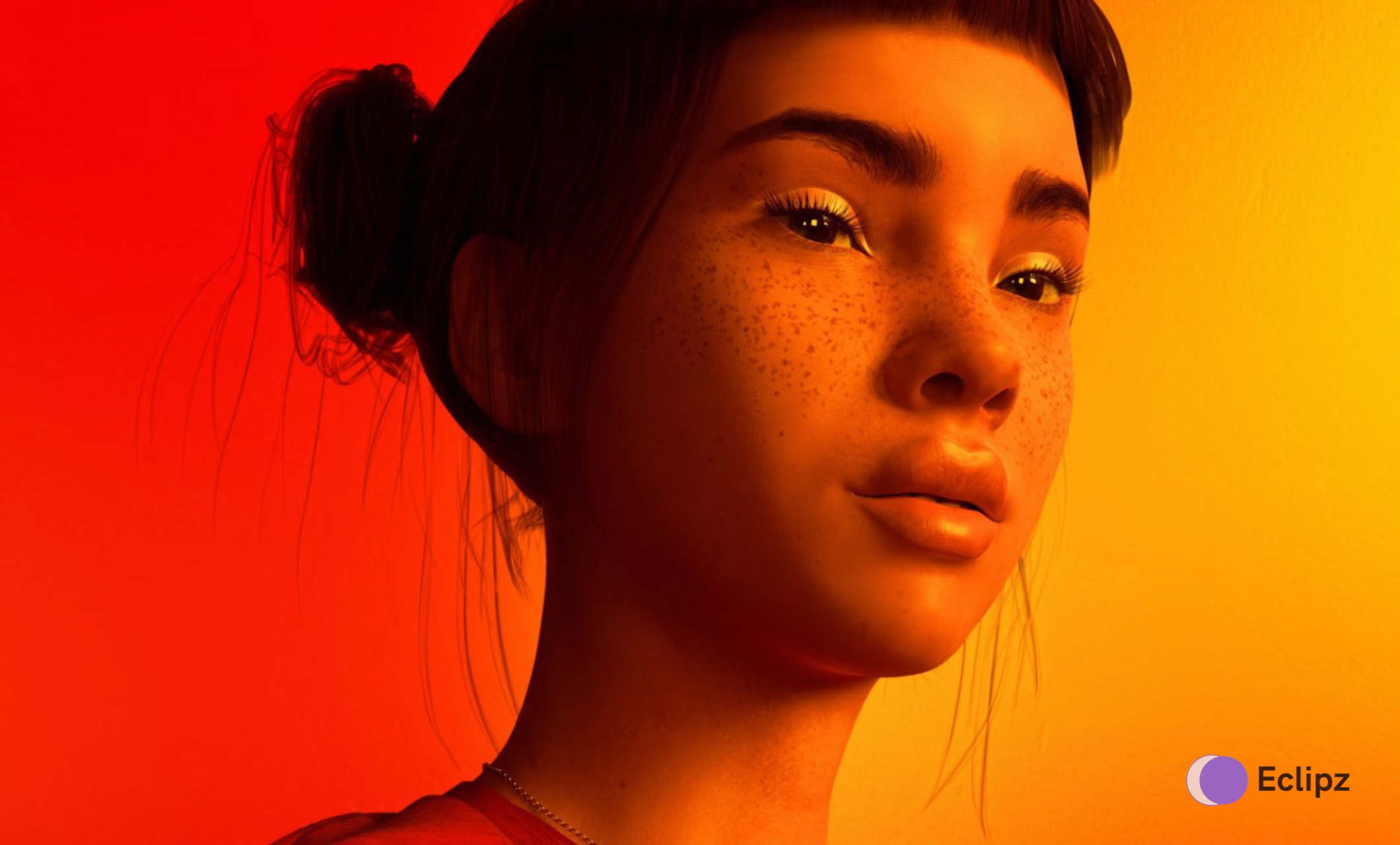

Kyra does not sleep. She does not cancel shoots, negotiate late, or post something off-brand on a personal account. She has over 200,000 Instagram followers, has worked with Boat, Puma and Myntra, and costs a fraction of what a comparable human influencer would charge per campaign. Kyra is India's first virtual influencer, a fully AI-generated creator, and she is not a novelty anymore. The global virtual influencer market was valued at $6.9 billion in 2024 and is projected to reach $37.8 billion by 2030. Indian brand budgets are beginning to move in her direction, and the reasons are more practical than they are futuristic.
What virtual influencers actually are
A virtual influencer is a computer-generated character designed to look, behave and post like a real person. They have defined personalities, aesthetic identities, content niches and brand partnerships. They are not chatbots. They are not automated accounts. They are fully scripted creative characters whose content is produced by a team of designers, animators and strategists working behind the scenes.
In India, Kyra sits alongside a small but growing roster that includes Zenia, a virtual fashion creator with a distinct aesthetic, and several brand-owned virtual spokespersons launched by companies wanting full creative and commercial control over their creator identity. Globally, characters like Lil Miquela have partnered with Calvin Klein, Samsung and Prada and regularly generate engagement that outperforms the human influencers on the same brand's roster.
Why brands are paying attention
The practical case for virtual influencers is built on three things: control, consistency and cost at scale.
Control means the brand approves every word, every visual and every brand association before anything goes live. There are no surprise personal opinions, no off-brand lifestyle content and no reputational incidents. For categories like financial services, pharmaceuticals and children's products, where a single creator misstep can create significant regulatory or reputational exposure, this control has real monetary value.
Consistency means the character never ages, never changes aesthetic direction and never needs a campaign rescheduled because of a personal commitment. A virtual influencer campaign can run simultaneously across twenty markets in twenty languages without a single production delay.
Cost at scale is where the economics become genuinely compelling. After the initial development investment of Rs 5 lakh to Rs 15 lakh for a quality virtual creator in India, the ongoing content production cost runs 60 to 70% lower than equivalent human influencer campaigns. For brands running high-frequency, always-on content strategies, this cost curve becomes a significant competitive advantage over time.
Where virtual influencers outperform and where they do not
Virtual influencers generate 3 times higher engagement rates than human influencers on average, and brands using them report 12 times higher engagement on sponsored posts in some categories. These numbers are real but they come with important context.
The categories where virtual influencers consistently outperform are fashion, beauty, gaming and technology, where the aspirational and aesthetic dimensions of the content matter more than personal authenticity. In these categories, consumers are already accustomed to heavily edited and stylised content, making the leap to a virtual creator smaller than it might seem.
The categories where virtual influencers consistently underperform are food, parenting, health and personal finance, where trust is built on lived experience and relatable imperfection. A virtual creator recommending a protein supplement or a mutual fund product does not carry the same credibility as a real person sharing a genuine experience. For these categories, nano and micro creators with engaged niche communities continue to deliver results that virtual influencers cannot replicate.
The ASCI question Indian brands cannot ignore
India's Advertising Standards Council has updated its guidelines to address virtual influencer content, and the requirements are unambiguous. Any content produced by a virtual influencer that promotes a product or service must carry a clear disclosure that the creator is not a real person. The label must be visible, prominent and placed upfront, using language like "This is a virtual influencer" or "AI-generated creator."
Brands that skip this disclosure face the same penalties as any other ASCI violation, up to Rs 10 lakh for individuals and Rs 50 lakh for entities under the Consumer Protection Authority. Given that the disclosure requirement is non-negotiable, brands need to factor it into the creative execution of every virtual influencer campaign from the brief stage, not as an afterthought after the content is produced.
What this means for Indian brands evaluating virtual influencers
The decision to invest in a virtual influencer is not a binary one between human creators and virtual ones. The brands using this format most effectively in India are doing so as a complement to their existing human creator strategy, not a replacement for it.
A virtual influencer works well as an always-on brand face that maintains aesthetic consistency across every touchpoint while human creators handle the authentic, community-driven content that builds genuine audience trust. The virtual creator handles volume and control. The human creators handle depth and credibility. Used together, they solve different problems in the same content strategy.
For Indian brands evaluating budget allocation in 2026, the question is not whether virtual influencers are legitimate. They are. The question is whether the category, the audience and the campaign objective fit a format where control and consistency matter more than lived experience and personal relatability.