%20(8).svg)
One Piece of Content
Every Platform
.svg)
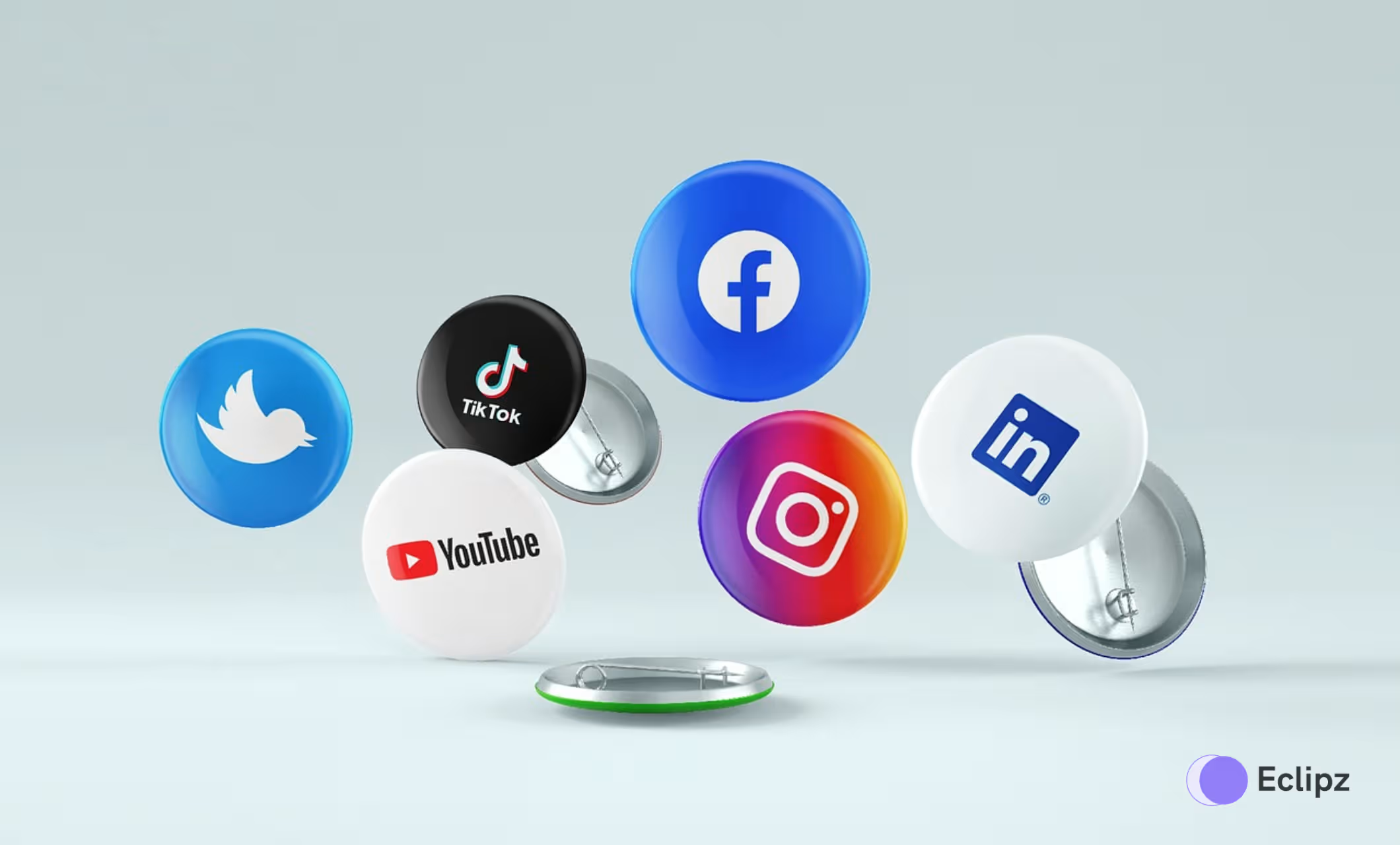

The creators posting consistently across Instagram, YouTube, LinkedIn and beyond are not creating new content for every platform from scratch. They are creating once and distributing everywhere intelligently. Marketers who repurpose content see a 40% increase in overall content output without proportionally increasing creation time. That number tells you everything about why repurposing is not a shortcut — it is the smartest content strategy available to Indian creators in 2026.
START WITH PILLAR CONTENT, NOT PLATFORM CONTENT
The repurposing system starts with one substantial piece of content - called pillar content - that contains enough substance to break into multiple smaller pieces. A well-structured YouTube video, a detailed blog post or a comprehensive carousel are all strong pillar formats.
The key principle is to create for depth first, then distribute for reach. A 10-minute YouTube video about a topic in your niche can generate 10 to 15 short clips for Instagram Reels, 3 carousel posts, multiple caption-based posts and a LinkedIn article - all from one recording session. This is not recycling. It is intelligent extraction of the ideas already inside your best content.
Not all content is worth repurposing. Only start with pieces that already performed well. Check Instagram Insights for your highest save and send rates. Check YouTube Analytics for your highest retention videos. These are your repurposing candidates - content that has already proven it resonates.
HOW EACH PLATFORM NEEDS DIFFERENT TREATMENT
The biggest mistake creators make when repurposing is copy-pasting the same content across every platform without adapting it. Each platform has a different audience, a different consumption habit and a different algorithm. The content needs to feel native to each one.
For Instagram, short clips under 60 seconds with a strong hook work best as Reels. The same idea as a 7 to 10 slide carousel works as a saveable educational post. Stories work as behind-the-scenes or quick takes on the same topic.
For YouTube, the full long-form version lives here. YouTube Shorts get the most punchy 15 to 30 second extracts with context added in the caption since YouTube Shorts audiences often discover you there first.
For LinkedIn, the same idea becomes a text-led post written in a professional, opinion-driven tone. LinkedIn rewards personal insight and contrarian takes — the same information that works as a visual Reel on Instagram works as a written perspective piece here.
THE REPURPOSING WORKFLOW THAT ACTUALLY WORKS
The framework works in three stages - Create, Extract, Adapt.
Create one strong pillar piece each week. Extract every discrete, valuable idea inside it - statistics, frameworks, personal stories, practical tips. Each extracted idea becomes a standalone piece of content. Adapt each extracted idea into the format that suits each platform.
A single YouTube video about a topic in your niche generates: 10 to 20 Instagram Reels and Shorts, 3 to 5 carousel posts, multiple LinkedIn posts, caption-only posts for Instagram feed and Stories content. That is close to a month of content from one recording session.
For Indian creators specifically, start with Instagram as your primary platform since it has the highest brand deal visibility, then repurpose to YouTube Shorts for discovery reach and LinkedIn for professional credibility. This three-platform stack covers the vast majority of what both creators and brands care about in India right now.
THE TOOLS INDIAN CREATORS ARE USING
The repurposing workflow does not require expensive tools. CapCut, which is free and widely used by Indian creators, handles video editing including captions and text overlays for repurposing long-form to short-form. Canva's free tier handles carousels and graphics. Zoho Social, built by an Indian company and priced at roughly ₹800 to ₹1,200 per month, schedules posts across Instagram, LinkedIn and YouTube simultaneously.
The full repurposing workflow for a single piece of content, once the system is established, takes 3 to 4 hours per week. That is a realistic commitment for a solo creator and produces significantly more content than starting from scratch every single day.