%20(8).svg)
The Unilever Signal
300,000 Creators
.svg)
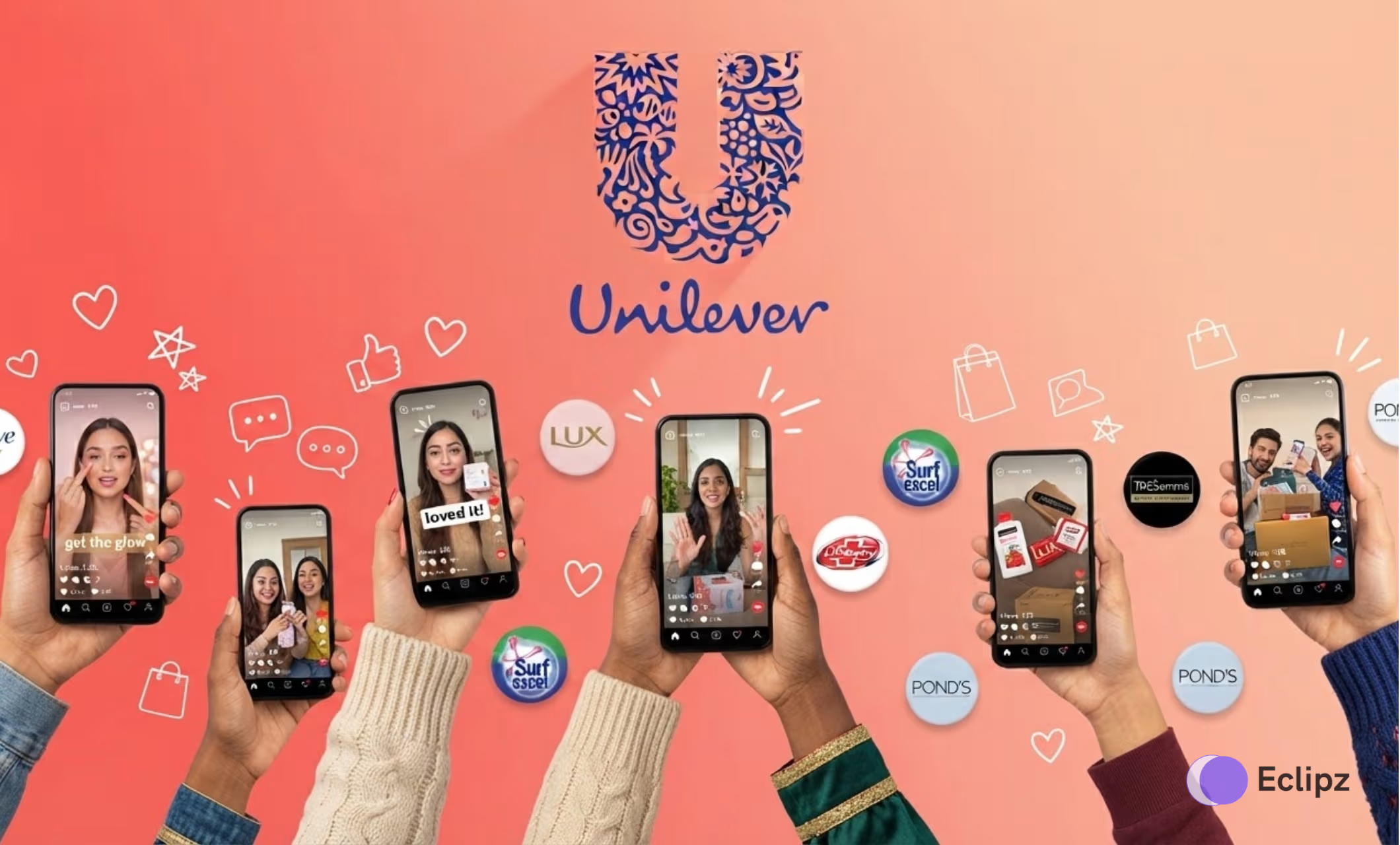

When the world's second largest advertiser moves 50% of its entire ad budget to creators and builds a network of 300,000 influencers, it is not a trend. It is a verdict. Unilever CEO Fernando Fernandez has been clear about what he wants "an influencer in every ZIP code in the globe" and the company has already expanded its creator network from roughly 10,000 when Fernandez took over to 300,000 today. For Indian creators and brands watching from the sidelines, the question is no longer whether creator marketing works. It is whether you are positioned to benefit from what comes next.
WHAT UNILEVER ACTUALLY CHANGED AND WHY IT MATTERS
Unilever's shift is not simply about spending more money on influencers. The structural change is more significant than that. The era of an agency presenting the big idea and then hiring influencers to amplify it is over. Creators are the people closest to communities, culture and the language of platforms, and they cannot be brought in at the end of the process simply to post the finished asset. They have to be part of the thinking at the outset.
This represents a fundamental rethinking of where creative authority sits. The #VaselineVerified campaign is a useful example. By embracing influencers as co-creators, the campaign delivered a 43% uplift in sales and earned recognition at the Cannes Lions Festival, including the prestigious Titanium Lion award. The result came not from a traditional agency big idea but from giving creators genuine creative input from the beginning.
The knock-on effects across the industry have been immediate. Micro-influencer rates have climbed by as much as 30% year over year and 62% of marketers are planning to increase influencer budgets in 2026. Where Unilever goes, others follow and they already are.
WHY INDIA IS SPECIFICALLY IN UNILEVER'S SIGHTS
This is not a Western marketing story with distant implications for India. Unilever intends to work with 20 times more influencers than before, with a strong emphasis on hyperlocal relevance across markets such as India and Brazil. India is one of Unilever's largest and most strategically important markets, and the hyperlocal creator model maps almost perfectly onto India's linguistic and cultural diversity.
The logic is straightforward. A creator in Jaipur speaking to a Rajasthani audience in Hindi about a Unilever personal care product will always outperform a polished pan-India campaign that feels distant and corporate to that same audience. Fernandez cited India as a model of the company's scale and consumer reach and the hyperlocal influencer strategy is designed to penetrate exactly the Tier 2 and Tier 3 markets where India's next wave of digital consumers is coming from.
For Indian creators outside metros, this is the clearest signal yet that the demand for authentic, regionally relevant content from real creators is not a niche opportunity. It is where the biggest advertising budgets in the world are heading.
THE MEASUREMENT PROBLEM THAT CREATES AN OPPORTUNITY
Unilever's shift has surfaced an industry-wide problem that nobody has fully solved yet. Although 97% of leaders believe they can communicate social media's value, only 30% of marketers believe they could measure social media ROI. As budgets increase, the opportunity is not just to invest more but to invest more intelligently.
The brands that pair a social-first content approach with honest measurement will pull ahead of the ones that just copied the headline. This is where smaller, more focused operators have a genuine advantage over industrial-scale creator networks. You do not need 300,000 creators. You need to know whether the creator spend you already have is actually driving results and most brands are flying blind on that.
For Indian brands specifically, this gap between spend and measurement is the single biggest opportunity to get ahead of the curve. Brands that build proper attribution infrastructure now trackable links, unique discount codes, platform-specific analytics will have a competitive advantage that compounds as creator budgets across the industry increase.
WHAT THIS MEANS FOR INDIAN CREATORS RIGHT NOW
The Unilever move has already caused micro-influencer rates to rise 30% year over year globally. In India, where creator rates have historically been suppressed well below international benchmarks, this shift creates meaningful upward pressure on what brands are willing to pay for authentic creator partnerships.
The creators best positioned to benefit are those who have built tight, engaged communities in specific niches not the ones chasing follower counts. Creators are truly at the heart of the new marketing model and building loyal relationships is key to scaling influencer marketing successfully. The brands following Unilever's lead are looking for creators with genuine community trust, not large audiences with passive engagement.
This also validates what the best Indian creators have understood intuitively that authenticity is not a content style, it is a business strategy. Creators who have resisted over-scripted brand deals, maintained genuine audience relationships and stayed true to their niche are now sitting on exactly the kind of asset that the world's largest advertisers are actively seeking.
WHAT THIS MEANS FOR INDIAN BRANDS RIGHT NOW
The industry signal from Unilever is unambiguous creator-led marketing is not the future of advertising. It is the present. Indian brands still running primarily on polished paid creative while allocating a small experimental budget to influencer marketing are already behind the curve.
The practical implication is not to copy Unilever's scale, which is neither achievable nor necessary for most Indian brands. It is to adopt the underlying philosophy treat creators as partners and co-creators from the beginning of the campaign process, not as distribution channels at the end of it.
It requires relationship, it requires shifting control which is the part most brands find genuinely difficult. Giving a creator meaningful input into how a product is presented is a fundamental shift from the brief-driven, approval-heavy process most Indian brand teams have built. The brands willing to make that shift will produce better content, build better creator relationships and deliver better results than those that keep treating creators as glorified media placements.