%20(8).svg)
Beyond Brand Deals
Build Your Business
.svg)
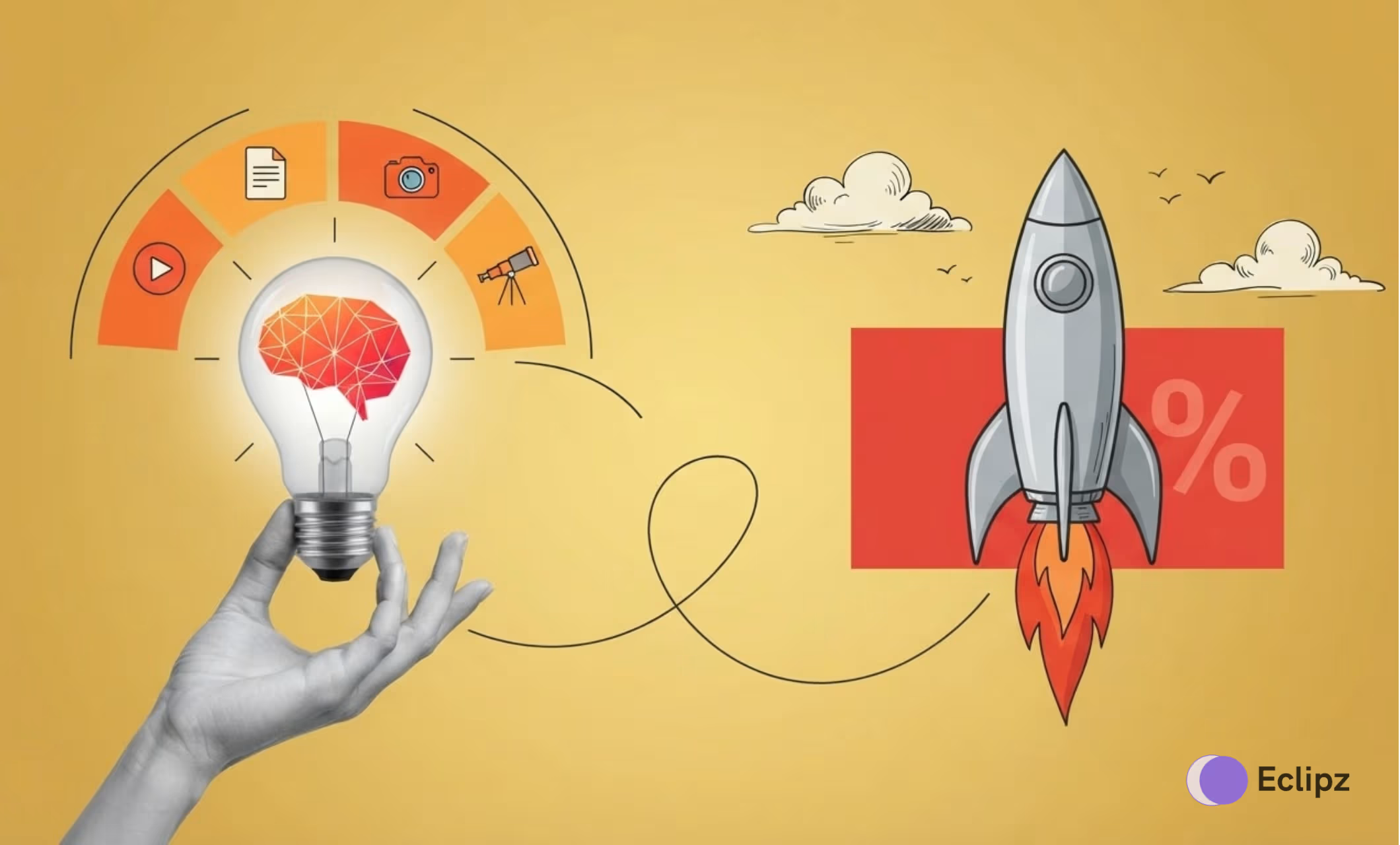

For the better part of a decade, the Indian creator's business model was disarmingly simple. Build an audience, rent it out to whoever paid the most per post, and call it a career. The follower count was the asset. The brand deal was the exit. That model has not died. But in 2026 it has stopped being the ambition. The ambition now is to own the thing being sold, not just the shelf space it sits on. Creators who once measured success in impressions are now measuring it in equity, recurring revenue and consumer businesses built on community trust.
Why Brand Deals Alone Are Not Enough Anymore
In 2026, Indian creators on platforms like YouTube and Instagram face a structural problem. Traditional methods like brand deals and ad revenue are becoming less predictable amidst evolving platform algorithms and increasingly crowded creator markets. New monetisation tools remain significantly underused by the majority of creators who still depend almost entirely on sponsored posts.
The problem with brand deals as a sole income source is structural, not seasonal. A brand deal requires a brand to want you at the exact moment you need income. It requires a brand's budget to be live, their campaign to be approved, and your engagement metrics to meet their current benchmarks. When any one of those conditions changes, the income stops. Building a business means building income that continues when brand deals do not.
Less than 10% of Indian creators earn meaningful income from content creation. The ones who do are almost never the ones who waited for brands to come to them. They built systems.
The Revenue Models Indian Creators Are Actually Using
Affiliate commerce, subscription-led content, digital products, creator-led brands and long-term partnerships are emerging as the strongest revenue models in India's creator market. These are not theoretical. They are what the creators building sustainable careers are actually doing right now.
Creator-led ventures like OWN by Food Pharmer and Theoli by creator Somya Bisla are examples of how trust-based communities translate directly into consumer businesses. These creators did not wait until they were large enough for a brand to notice them. They built products their audiences were already asking for.
The biggest shift is that creators with deep audience relevance are monetising more sustainably than creators relying only on scale. A creator with 30,000 followers who has built genuine authority in a niche is generating more consistent income than many creators with ten times the audience and no clear positioning.
Digital Products Are the Fastest Low-Cost Entry Point
For most Indian creators, digital products are the most accessible first step beyond brand deals. Templates, guides, preset packs, e-books, mini-courses and downloadable resources require no inventory, no shipping and no minimum order quantity. The entire margin goes to the creator.
UPI is the default mobile payment method in India. Checkout without UPI loses buyers who would happily pay ₹199 to ₹499 for a template or guide. Tools that enable UPI-based digital product sales with zero or near-zero platform fees make this income stream genuinely viable for creators at every follower tier.
The economics are simple. A creator with 10,000 followers who sells a ₹499 guide to 1% of their audience earns ₹49,900 from a single product launch. That is more than many creators earn from multiple brand deals combined — and it continues earning every time a new follower discovers the content and buys the product.
Subscription Revenue Is the Most Underused Model in India
Subscriptions represent recurring, predictable income that does not depend on the algorithm, the brand pipeline or the viral moment. Yet most Indian creators have not built any subscription offering despite platforms now making it significantly easier to do so.
Instagram Subscriptions, YouTube Channel Memberships and independent platforms like Patreon and Substack all allow creators to charge a monthly fee for exclusive access. The content does not need to be dramatically different from what you already produce. Behind-the-scenes footage, early access, deeper dives on topics you cover publicly, and direct community access are all things audiences will pay for if the trust is already there.
Platform executives consistently advise creators to build monetisation systems that do not rely entirely on algorithms or viral spikes. A creator with 500 subscribers at ₹99 per month earns ₹49,500 monthly regardless of whether their last Reel went viral or not.
Creator-Led Brands Are the Highest Ceiling
The shift from rented reach to owned IP is showing up at the top of the creator economy in India. Creators who built audiences by sharing expertise in a niche are launching products in that niche — and their audiences are buying because the trust was built before the product existed.
India's influencer marketing industry could cross ₹5,000 crore by 2027, reflecting the rapid formalisation of the creator economy and the growing commercial potential of creator-led ventures. The creators at the centre of that growth are not the ones with the most followers. They are the ones who turned community trust into commercial infrastructure.
This does not require starting a venture-backed company. A fashion creator launching a curated edit of pieces they wear. A fitness creator selling a training programme they follow themselves. A finance creator packaging the exact framework they used to build wealth. The product already exists inside the content. The business is the decision to package and sell it.
The Practical Starting Point
Building beyond brand deals does not require abandoning brand deals. It requires treating them as one income stream among several rather than the only one. The creators building the most sustainable businesses in India right now are running brand deals alongside affiliate links, a digital product and at least one subscription offering simultaneously.
Start with the product your audience asks you about most frequently. The comment or DM you get regularly where someone asks how you did something, what you recommend, or where they can learn more is the product brief. Build that first. Price it at ₹199 to ₹499 to reduce friction. Launch it to your existing audience before spending any time on marketing. The feedback from that first launch tells you what to build next.