%20(8).svg)
Influencer Strategy
That Converts
.svg)

Most brands treat influencer marketing like a slot machine. Pick a creator, pay for a post, hope something sticks. That is not a strategy. The difference between brands generating real ROI and those burning budget comes down to one thing — structure. A clear system for identifying the right creators, producing content that converts and measuring outcomes against revenue, not just impressions.
START WITH THE GOAL, NOT THE CREATOR
The single biggest mistake brands make is reaching out to creators before defining what success actually looks like. Awareness campaigns prioritise reach, impressions and video views. Conversion campaigns need cost per acquisition, click-through rate and tracked revenue as their north star.
Every part of the strategy that follows depends on getting this first step right. The creators you choose, the content format you brief and the metrics you track all change based on whether the goal is awareness or conversion.
MATCH THE CREATOR TIER TO THE GOAL, NOT THE BUDGET
Nano and micro influencers in the 1,000 to 100,000 follower range consistently outperform macro and celebrity tiers on engagement and cost per engagement. They are the default tier for most brand budgets in 2026.
The math makes this clear. A nano influencer at 5% engagement on 5,000 followers delivers 250 interactions for close to zero cost. A macro influencer at 0.8% engagement on 800,000 followers delivers 6,400 interactions for $8,000 - each engagement costing roughly $1.25. Multiply nano creators across 20 partners and the economics tilt sharply in favour of smaller, more numerous partnerships.
Most successful brands use a mix - a small number of macro creators for reach, several micro creators for credibility, and a larger group of nano creators for authentic engagement, adjusting ratios based on budget and goals.
PICK TWO PLATFORMS, NOT FIVE
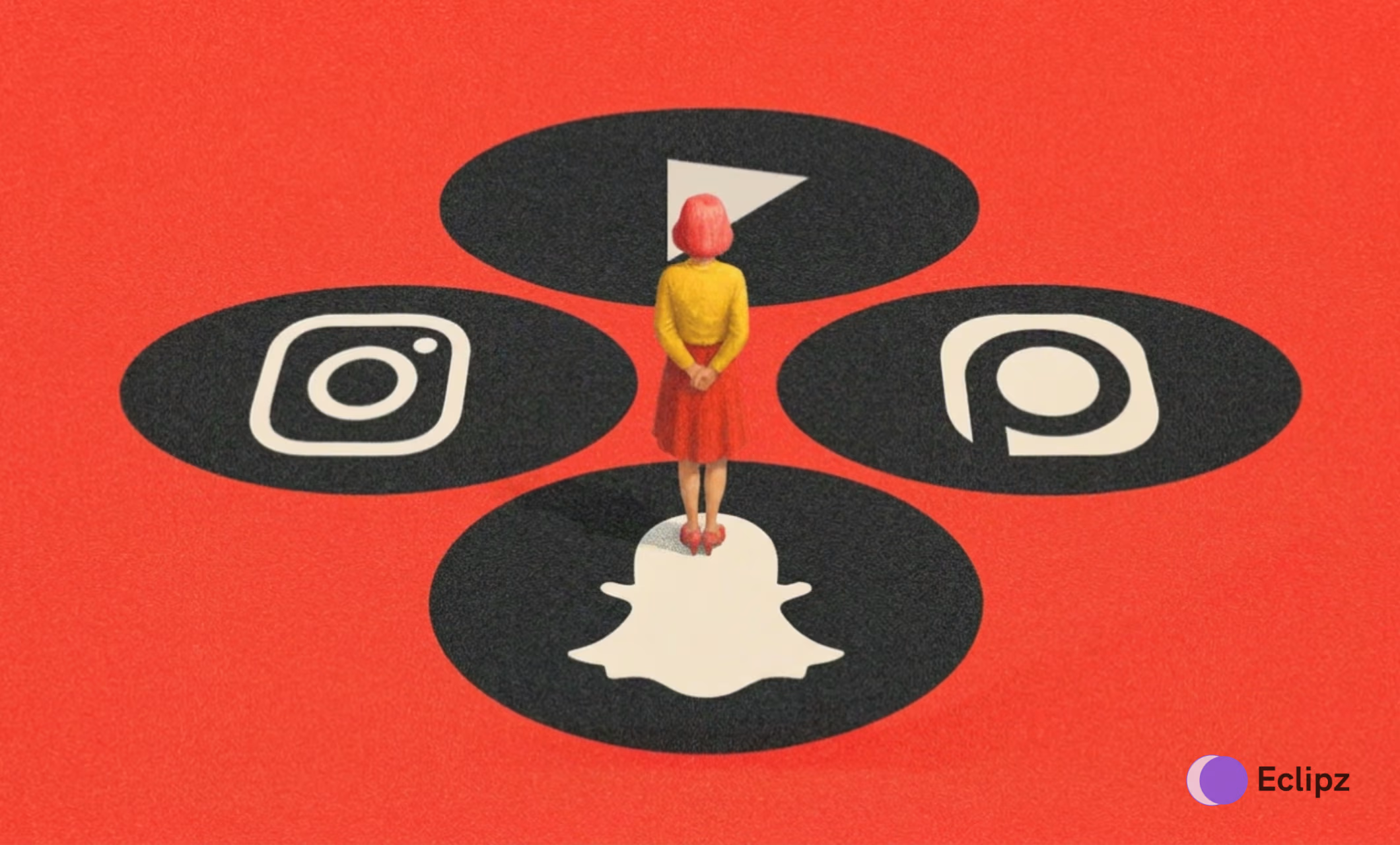
In 2026, most brands focus on two to three core platforms rather than spreading thin across every channel. The pattern that works - Instagram for conversion, TikTok for discovery, YouTube for depth and LinkedIn for B2B. Most brands need two of these four. Few benefit from running all of them at once.
Choosing fewer platforms and doing them well consistently outperforms a thin presence spread across every channel available.
GIVE CREATORS DIRECTION, NOT A SCRIPT
Overly scripted content feels fake. Let creators use their own voice while aligning on key messages and values upfront. The brief should cover the product, the core message and the platform. The actual execution belongs to the creator.
This is not a soft preference. It directly affects performance. Audiences have developed an instinct for spotting content that feels manufactured, and that instinct kills conversion before the product message is even delivered.
BUILD LONG-TERM RELATIONSHIPS, NOT ONE-OFF POSTS
When creators post about a brand repeatedly, their audience starts to associate them with that brand. That is when influence actually compounds. Long-term creator partnerships drive 70% higher engagement than one-off campaigns.
Start with a pilot. Run a test with 5 to 10 creators and measure engagement quality, conversion and audience fit before scaling. The creators who perform in the pilot become the foundation for ongoing partnerships.
TRACK CONVERSION, NOT JUST ENGAGEMENT
Engagement metrics tell you whether content resonates. They do not tell you whether it converts. Use trackable links, unique discount codes and direct attribution to product pages so every sale can be traced back to a specific creator and piece of content.
Brands that connect campaign data to revenue report an average return of $5.78 per dollar spent. Without that tracking infrastructure in place from day one, it becomes nearly impossible to know which creators and content formats are actually driving sales versus simply generating likes.