%20(8).svg)
Always-On UGC
Why One-Off Is Over
.svg)

Most Indian brands still run influencer marketing in bursts. A product launches, the team briefs five creators, the posts go live, and then everything goes quiet for three months. The awareness spike fades, the algorithm moves on and the brand starts from zero with the next campaign. Always-on creator marketing is the opposite - a fixed group of creators, paid consistently, posting about the brand throughout the year. The work runs like a channel, the same way paid ads or email does. And the brands that have made this shift are not going back.
Why One-Off Campaigns Stop Working
Early influencer marketing relied heavily on short-term sponsored posts and event-based activations. These one-off efforts often delivered spikes in awareness but struggled with sustained impact or accurate measurement of downstream sales.
The structural problem with one-off UGC campaigns is that trust does not build in a single exposure. 82% of consumers report being more likely to purchase from a brand that includes user-generated content in its marketing efforts — but that likelihood increases significantly when the same trusted voice has mentioned the brand multiple times across an extended period. One post creates awareness. Twelve posts across a year create association. Association is what drives purchase decisions.
Hearing about a brand from the same trusted creator many times across a year moves people far more than the same number of posts crammed into two bursts. The always-on model is not just a different campaign structure. It is a fundamentally different approach to how trust compounds with an audience over time.
What Always-On Actually Looks Like in Practice
The winning brands have stopped running one-off campaign bursts and started operating always-on creator programs - continuous rosters weighted toward mid-tier and micro creators, powered by AI for discovery and measurement, paid on performance, and run as a system rather than a series of expensive experiments.
In practice, an always-on UGC program for an Indian brand typically involves a core roster of 10 to 20 nano and micro creators posting consistently throughout the year, a monthly content calendar aligned to the brand's product calendar and cultural moments, a simple briefing process that gives creators direction without restricting their voice, and a performance review cycle that identifies top performers for deeper investment and replaces underperforming creators with fresh voices.
Moving from campaign mode to a working always-on program takes 90 days. The five steps are mapping current creator spend and relationships, selecting a pilot cohort of aligned creators for six to twelve month commitments, establishing content cadence and briefing templates, setting up performance tracking, and reviewing and refining based on early data.
Why Micro Creators Are Central to the Always-On Model
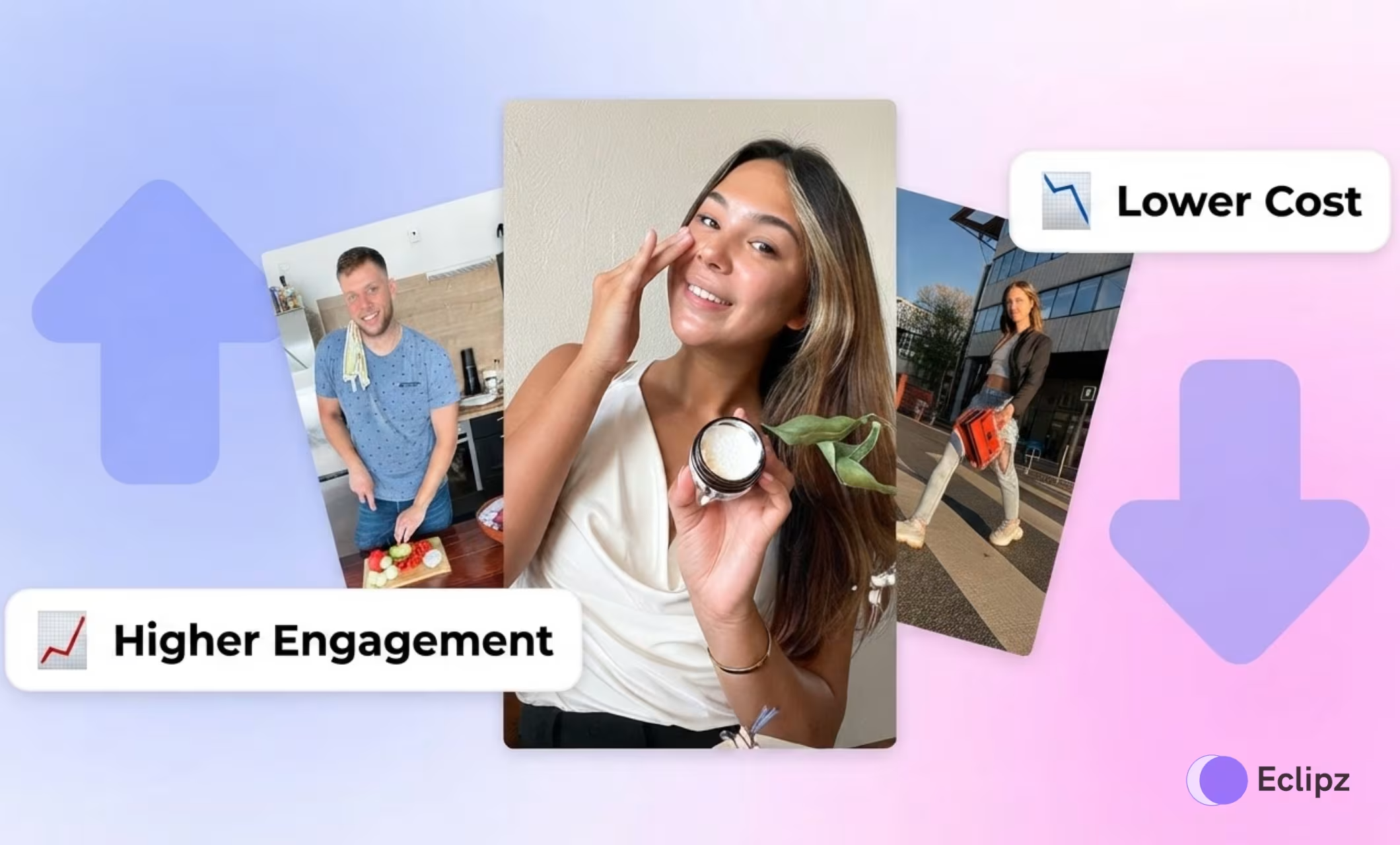
Micro and nano creators continue to deliver higher engagement rates and deeper community connection, making them ideal partners for conversion-focused campaigns. Their audiences feel more like communities than spectators, and their recommendations are often perceived as more honest and relatable. They are also cost-efficient within long-term creator programmes. Brands should prioritise building groups of small creators rather than investing everything in one macro influencer.
For Indian brands specifically, the economics of micro creator always-on programs are particularly compelling. 44.9% of creators prefer stability - meaning micro creators are genuinely motivated to commit to longer term relationships that guarantee consistent income, and that motivation shows in the quality and consistency of the content they produce.
A macro influencer hired for a one-off post produces content that may or may not align with their genuine voice. A micro creator in a six-month relationship with a brand produces content that becomes progressively more natural, more integrated and more trusted by their audience as the partnership deepens.